
« It is important to maintain a good mixture of sport and partner relations as that is central to the Défi. »
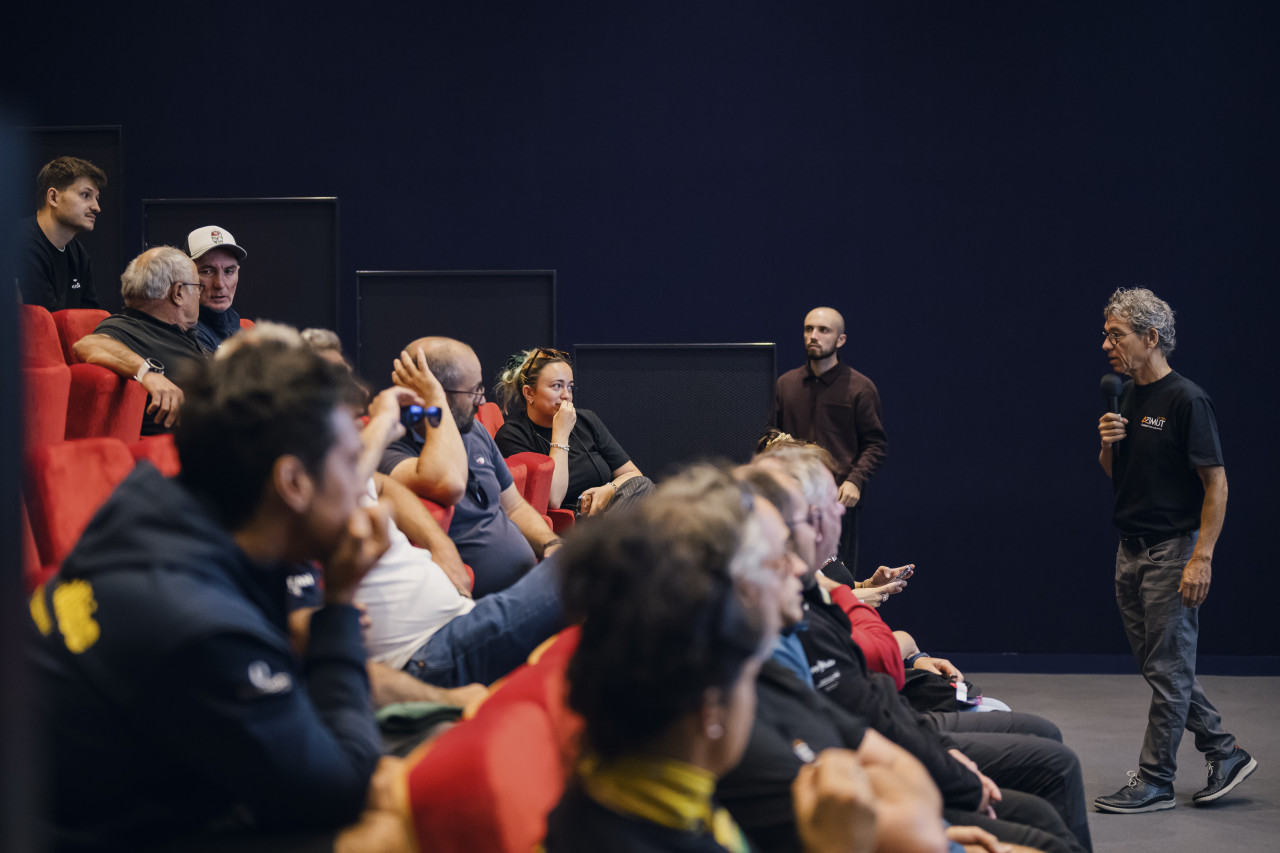
Review and outlook with the Défi's creator, Jean-Marie Corteville, aboard the catamaran Royale this afternoon around Groix.
You’ve been organising the Défi Azimut Lorient Agglomération for 15 years. Has a sense of weariness ever set in?
Jean-Marie Corteville: “No two Défis are ever the same. I never tire of it because every year we experiment with something new. Fifteen years ago, we started with a 24 H sprint and then we added the Tour de Groix and the Runs to the mix, before we switched to the 48 H race to bring the event in line with the IMOCA Globe Series programme. There’s something new every year. In 2026, we had the idea of some added extras like the interactive cartography with specialist input from our writers, as well as Christian Dumard and coach Tanguy Leglatin. Then we produced some live content for ourselves as well as for France TV Sport, which really boosts media coverage.”
For the Azimut company, is it also an opportunity to activate your networks and bring together those within your ecosystem?
Jean-Marie Corteville: “We’ve started creating partnerships and serving the local authorities. We don’t receive subsidies, we sell services using highly professional methodologies, with a legal structure dedicated to the Défi, which is separate to the Azimut company. Given that Azimut is a service provider for other race organisers thanks to its digital solutions, the Défi is a good testing ground for us.
One of our focuses this year has been branching out into ‘hospitality’, which is not something we’re very familiar with. We’ve brought together groups of partners, which we’ve taken out sailing to enjoy the IMOCA show, as well as participate in two very successful ‘Afterworks’ sessions. The interaction between our partners and clients was excellent. On top of that, on an operational level, the company’s employees are continuing to help out and share their technical skills because, though you wouldn’t think it, the increasing success of the race is generating more and more traffic on our servers.”
How did the skippers seem to you?
Jean-Marie Corteville: “As per usual, they were extremely focused and available. They are extraordinary athletes, but they are also thrilled to be here, they’re very good at sharing and they’re all raising their game. Even when they retire from a race or don’t perform so well, they know that their presence here is an added bonus. I welcomed back Davy Beaudart (Bureau Vallée) in the wee small hours and I discovered a happy chap on the dock, who knows how precious the event is for stepping up his performance this season. I would just like to mention the winner too, who bagged his second outright win in the event and won all three acts of the Défi. Macif Santé Prévoyance is a remarkable machine with a skipper who is incredibly talented. Sam is also a lovely, humble guy who is very hospitable. I know that the Azimut guests on his boat for this Sunday’s Tour de Groix will have had an amazing day.”
5 boats retired from the race, a rare occurrence in the 48 H Azimut, which enjoyed summery conditions. Have you come up with any solutions to prevent a repeat performance?
Jean-Marie Corteville: “Yes. Together with the IMOCA class and its president Antoine Mermod, we have a few ideas. The foilers are increasingly quick but the daggerboard boats are still fantastic and ensure that IMOCA is accessible to newcomers. Creating two courses is tempting but given that we must continue to be in line with the Vendée Globe rules, we’re keen to stick to a single ranking. The most viable option right now would be to add an extra day to the Défi, within the same competitive programme, which can adapt to the weather conditions at the time. Where the forecast is favourable, we could send the boats around the Scillies for example. And if conditions are set to be coloured by high pressure, as they were this year, with some tricky sections likely, we could stick to a more traditional triangular course in Biscay, which avoids putting the slower boats at a disadvantage by giving them extra time. It is important to maintain a good mixture of sport and partner relations as that is central to the Défi.”