
“A course that fulfils the brief of the 48 H race”
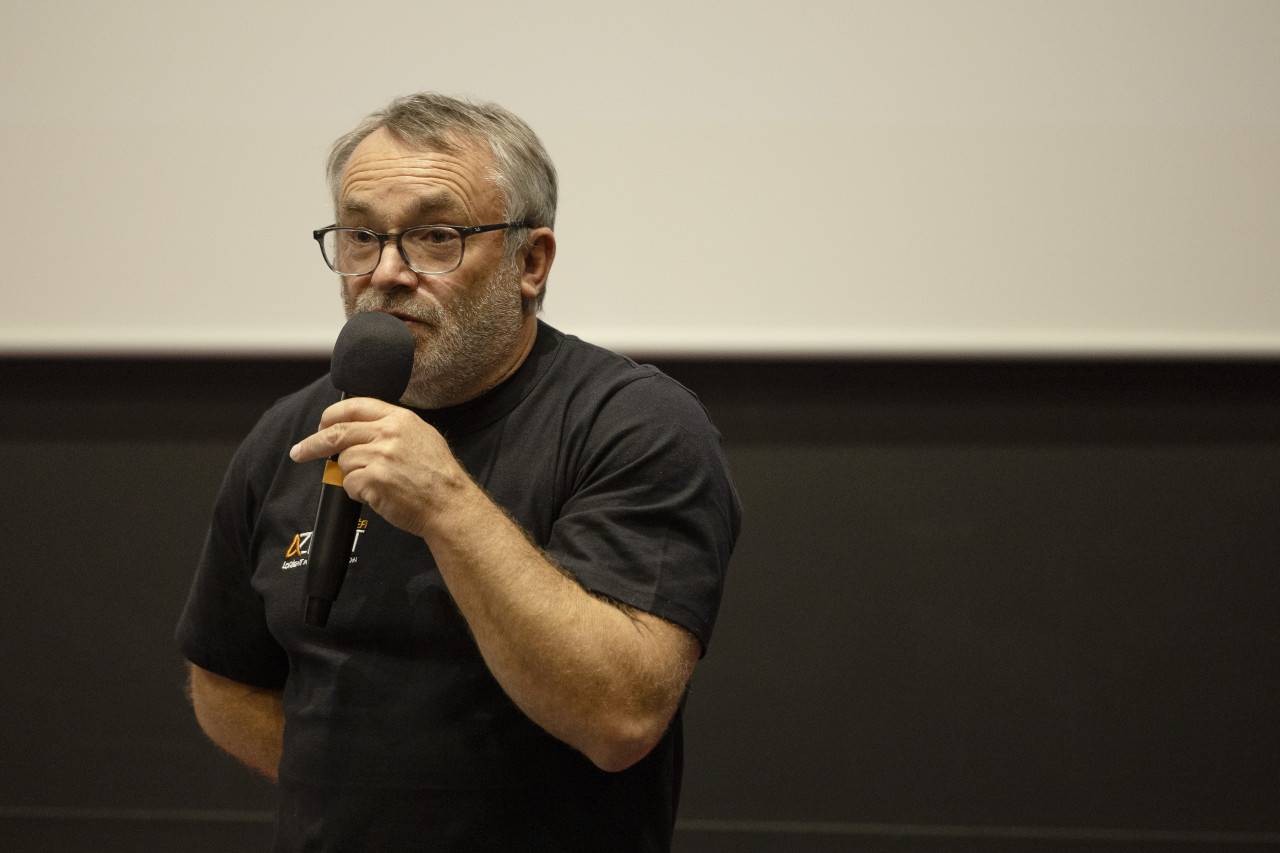
An important dress rehearsal for the skippers prior to the Route du Rhum, the Défi Azimut is also a golden opportunity for Race Management to gain valuable insight into the constantly evolving IMOCA fleet.
Back in charge of the general on-the-water organisation of the event, Francis Le Goff has teamed up with weather and IT expert Yann Chateau, who will assist him in the major single-handed transatlantic race setting sail in November. We get the low-down from these two key figures, familiar faces at all the big offshore events, on what goes on behind the scenes at this Lorient meet…
Just a few hours before the start, can you explain the thinking behind your course design for the 48 H Azimut?
FLG: “As is the case every year, and in line with the event schedule, the sporting objectives and the brief for the 48 H race, we’ve made every effort to design a course that enables the first boats to finish on Saturday morning. Beyond the weather constraints, there are a lot of different elements that come into play when you’re setting a course. In a race like the Défi, it is also important for the race to be an interesting competition for the entire fleet and ensure it fits in with the overall programme for the event, particularly with regards its B to B aspect, which features a day of conferences on shore on Friday.”
You also have to contend with the increasingly obvious differences in speed between the foilers and the daggerboard boats…
YC: “The first boats are expected to finish a little less than 48 hours after the start. We’ve sought to base our calculations on an average speed for the whole fleet, in the knowledge that certain competitors will take longer to cover the distance.”
FLG: “The fact that the daggerboard boats might run out of time to complete the course is a cause for concern among the class. For now, there are no categories within this circuit, so we’ve come up with just a single course. However, with the Azimut waypoint positioned 110 miles to the west of Penmarc'h, we have a little bit of wiggle room to modify the course. We can change the position of this virtual mark before the first boat rounds the BXA (a fairway buoy at the mouth of the Gironde), but after the start we’ll have to respond quickly if we’re to get the chance to check the latest GRIB files and decide whether or not we need to adjust the position of this mark or add an extra one between Penmarc'h and Lorient.”
Competitively, what are the first challenges in this 48 H race?
FLG: “The race will be punctuated by a front rolling through after the start, which will generate around fifteen knots of breeze. It is vital to get off to a good start of course, which may well be the first challenge given that some skippers are finding their bearings in solo format or are only just getting a feel for their boat. Starting the race with a front rolling through downwind is more complex: if you botch your start and fall off the pace, you’ll get hit by the front earlier, whilst those at the front of the pack continue to gallop away… For the foilers, it will be a real drag race, where those who manage to maintain
stable flight will have the edge. For those competitors who get caught and end up on a downwind VMG, it will be all about nailing the timing for putting in their gybes. It’s going to be racing at its finest and it will be tactically intriguing.”
And then onto the beat?
YC: “This section of the course promises to be just as thrilling as the fleet picks its way along a ridge of high pressure. The zone of low pressure, which is due to pass to the north once it’s barrelled across the entire Atlantic Ocean and generated the front expected to roll through just after the start, is also set to cause stormy conditions synonymous with 3 to 3.5-metre waves. As a result, once the fleet is close-hauled again, the skippers will have two strategies to choose from in order to make northing: play around with the curve of the ridge or play around with the pressure. Gaps are bound to open up there too…”
During yesterday’s speed runs, we saw that the most honed IMOCAs always perform the best. How do you adapt your polars to keep pace with these developments?
YC: “We’re fortunate in that we’re able to work on a fair number of races, including the Transat Café L'Or. As such, we’re always updating our polars as we go along for these major oceanic sequences. When our polars really don’t tally up with the reality, we chat with the skippers at the finish to work out what’s changed: the autopilots, the sails, etc. I also analyse a lot of the ‘pos.reports’ (position reports) from each of the major races. It involves a lot of long-term monitoring. Observing yesterday’s speed runs out on the water, when the Race Committee were managing the operation, was a very interesting way to get to know the boats and understand how they handle.”
FLG: “I will be able to glean further information too as we’re fortunate in that we’ve established a trusting relationship with a lot of skippers and we are lucky to be able to rely on the polars shared with us by some excellent boats. What we have on Race Management’s computers stays on Race Management’s computers!”
And how do the two of you work together?
FLG: “Naturally, we complement one another really well. I don’t know half of what Yann does at his computer and I have no desire to find out. In the Route du Rhum, there will be seven of us in the Race Management team. My role includes keeping an eye on the human aspect, to ensure that there is good cohesion among the team, which requires interaction with all the different people involved in an event like that, in terms of safety, on-the-water logistics, communication and media. Sometimes there’s a lot of pressure to deal with and it’s vital to have a close relationship with everyone. In this domain, sharing knowledge is crucial in the sense that Race Management is a highly unique profession, which involves a lengthy apprenticeship. Becoming a Race Director is a gradual process, integrating co-optation and promotion, and that’s something that’s always been part of my work and colours my style if you like. On a personal level, when I was offered the post of Race Director of the Route du Rhum a few years ago, I opted to take the time to get to grips with every aspect of the job by being their assistant. I learnt a great deal alongside Sylvie Viant, Jean Maurel and Gilles Chiorri. I’m adopting the same approach with Yann, who is also an old friend, and with all those working with me.”
YC: “It’s fair to say that we’re at the stage now where I can feel when Francis is stressed or something’s bothering him. I’m able to see where he’s coming from. In a Route du Rhum, the pressure on him comes from all sides and my role is to shoulder as much of that as possible, and that includes making decisions for him sometimes. In more than 95% of cases I get it right, but if ever I make a mistake, Francis takes full responsibility for any decisions made by Race Management.”
And what are your takeaways in this Défi Azimut?
FLG: “This is the last event before the Route du Rhum so inevitably you learn a vast amount about the fleet as the 15 boats competing in the 48 H race are all lining up on the starting line in Saint Malo in a few weeks’ time. It’s also a proper warm-up for us, which enables us to accumulate a great deal of knowledge and hone our craft to ensure we can guarantee the safety of this stellar fleet even more thoroughly and make sure it is able to be as competitive as possible.”